We've sent you an email with a link to update your password.
Reset your password
We will send you an email to reset your password.
How to Style Wide-Leg Dress Pants for a Wedding (When You'd Rather Wear a Skirt)
Malcomodes
0 comments
The Wedding Guest Dilemma Nobody Talks About
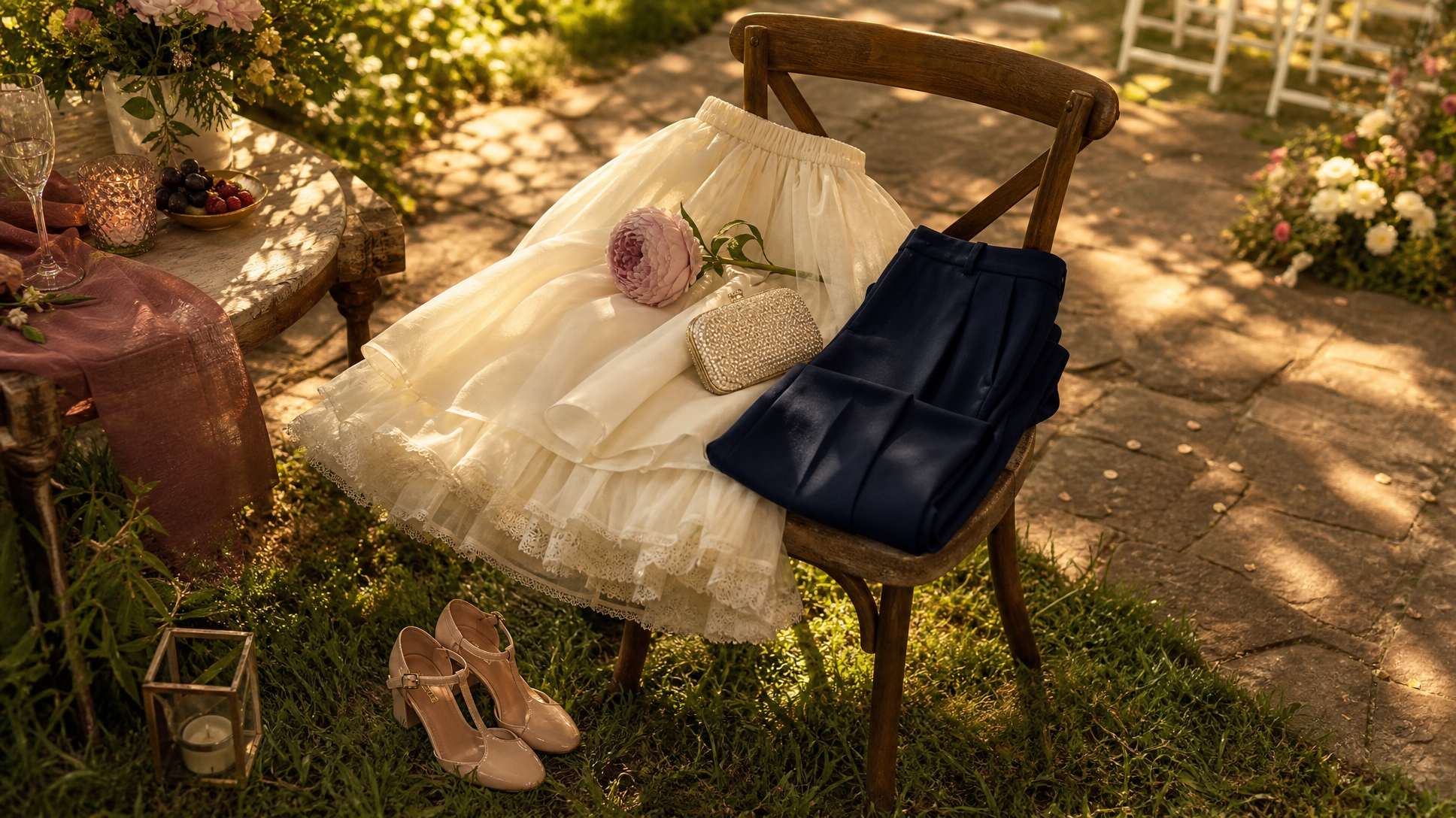
You get the invitation. Dress code says "cocktail attire" or "garden party formal" and suddenly you're staring at two completely different directions: the wide-leg dress pants that are all over Pinterest right now, or the full, swishy skirt you've been wanting an excuse to wear. Both are legitimate. Both can look stunning. But they do very different things for your silhouette, your comfort, and honestly, your mood on the day.
This guide breaks down both options honestly — what each one actually does, who each one works best for, and how to style them properly. If you already know you're a volume-and-skirt person, skip ahead. If you're genuinely torn, read the whole thing.
What Wide-Leg Dress Pants Actually Do at a Wedding
Wide-leg trousers have earned their place at formal events. A well-cut pair in a fluid fabric — crepe, satin, chiffon — reads as intentional and polished, not like you forgot to buy a dress. The silhouette is long and lean from the waist down, which creates a vertical line that elongates the body.
That's the upside. The honest downside: wide-leg pants require a specific fit at the waist and hip to work. Too much fabric pooling at the ankle or a waistband that gaps at the back and the whole look collapses. They also tend to photograph flat — you get elegance, but not drama.
How to Style Wide-Leg Dress Pants for a Wedding Guest Look
Anchor the waist. Tuck in your blouse or choose a fitted top that defines where your torso ends. Wide-leg pants need contrast at the top — a flowy top just creates one big column of fabric.
Choose the right fabric. Stiff fabrics like ponte or thick wool feel too office-y for a wedding. Go for something with movement: silk, crepe, or a chiffon blend.
Get the hem length right. The hem should graze the top of your shoe. Too short and the wide leg looks stubby; too long and you're a tripping hazard on the dance floor.
Add a heel. Wide-leg trousers and flat shoes can work, but a block heel or kitten heel gives the silhouette the lift it needs, especially for petite frames.
Keep accessories intentional. Because the pants are already a statement, let one other element — a structured clutch, a bold earring — do the talking. Don't pile it on.
When a Full Skirt With a Petticoat Is the Better Call
Here's the thing about wide-leg pants: they're elegant, but they don't twirl. And if you're the kind of person who has ever thought "I just want to wear something that moves when I move," pants — however well-cut — are probably going to feel like a compromise.
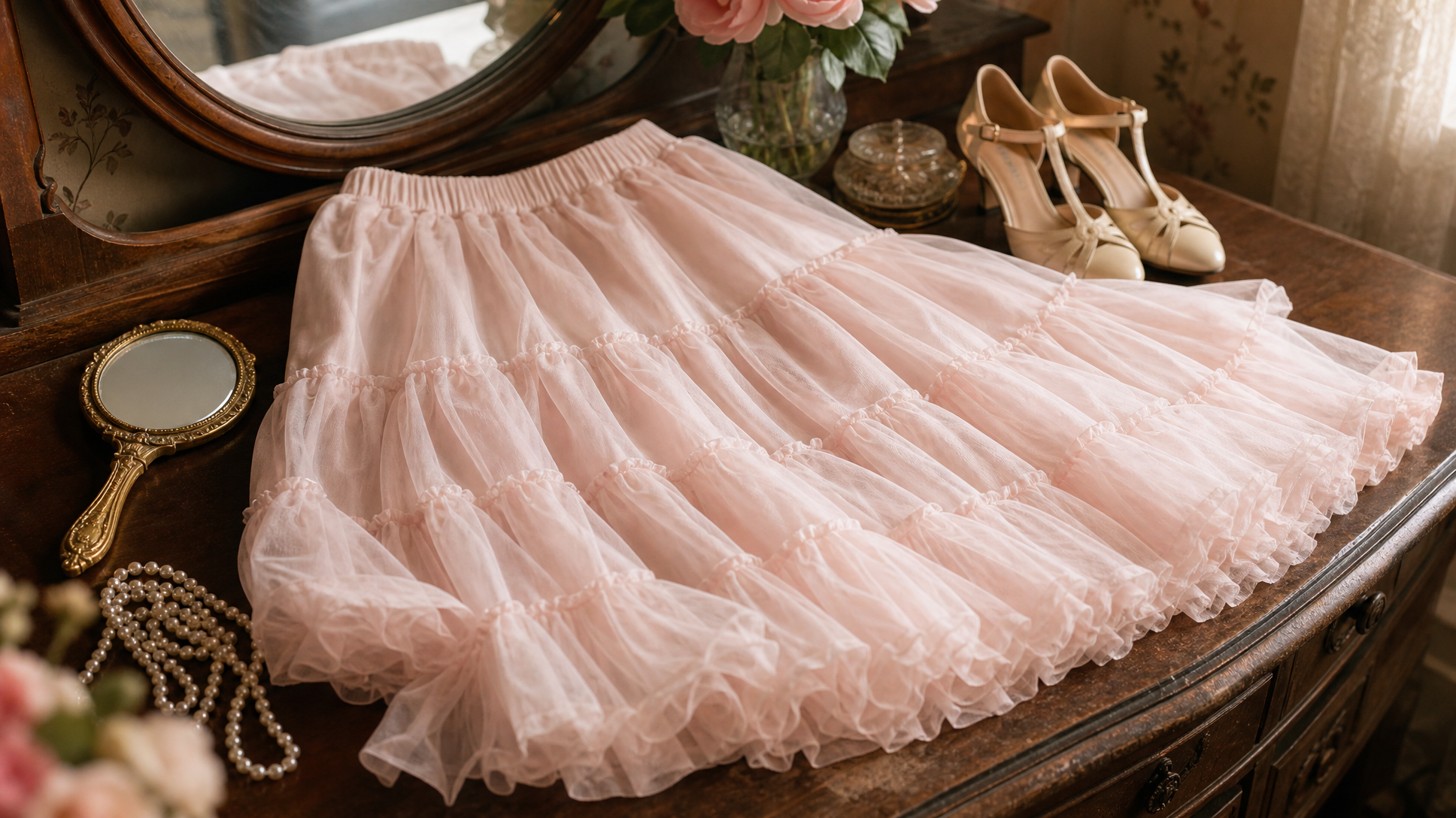
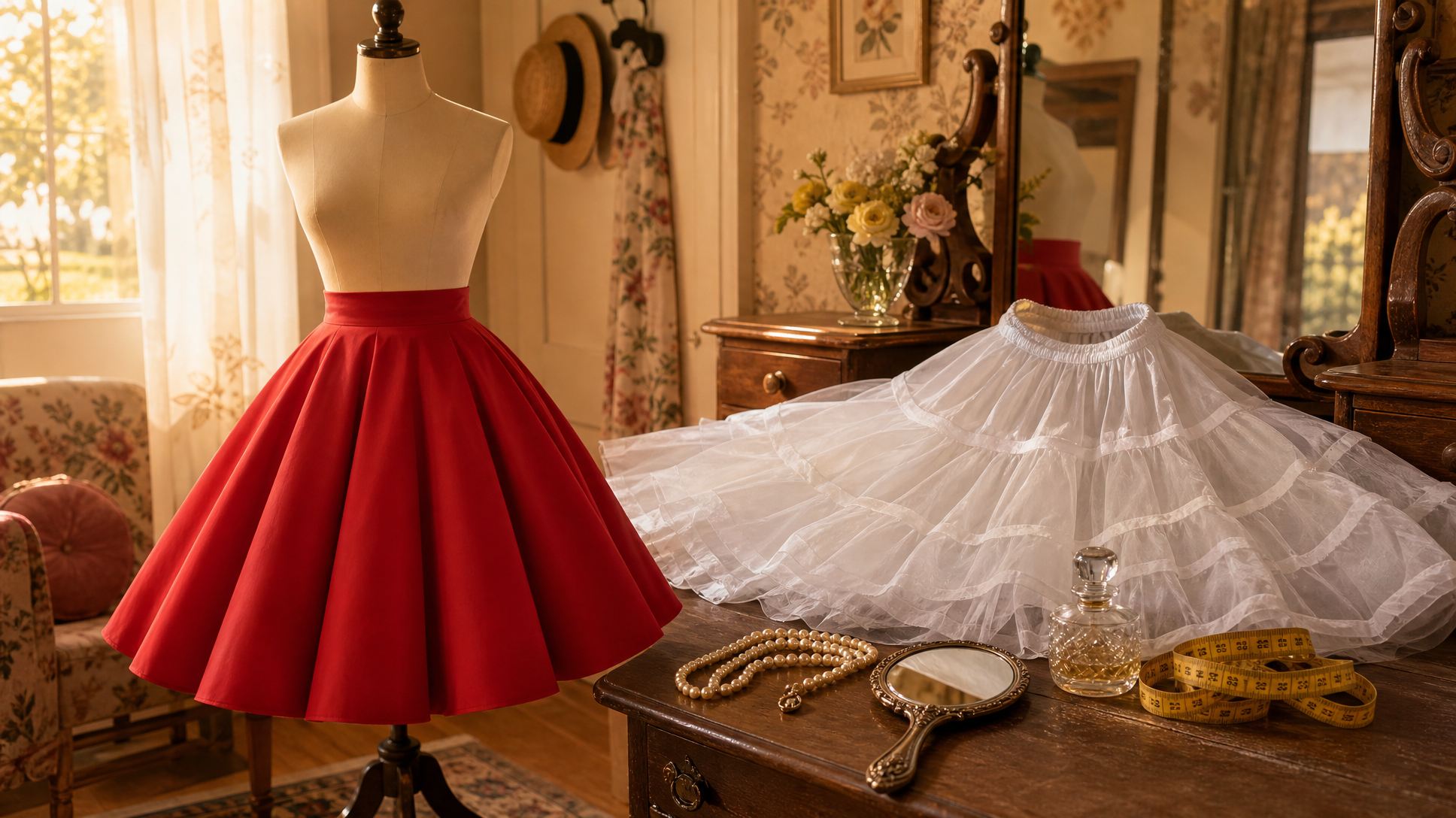
A full skirt with a petticoat underneath gives you volume that's structural, not just visual. The skirt holds its shape whether you're standing for photos, sitting through the ceremony, or actually dancing at the reception. It also works across a much wider range of body types than wide-leg pants do, because the volume comes from the skirt itself rather than depending on a precise fit through the hip and thigh.
For vintage, rockabilly, pin-up, and swing-dance events especially, a petticoat-supported skirt isn't just appropriate — it's exactly right. It signals that you understand the aesthetic and you committed to it.
How to Build a Wedding Guest Look Around a Petticoat
Start with the skirt length. A knee-length or midi skirt over a petticoat is the sweet spot for most wedding settings. Tea-length (hitting mid-calf) reads as formal without being floor-length, and it shows off your shoes.
Match petticoat fullness to the occasion. A garden party or vintage-themed wedding can handle maximum volume — go full and fluffy. A more traditional ballroom wedding calls for moderate fullness: enough to give the skirt shape without overwhelming the room.
Layer a fitted top or bodice above the skirt. Just like with wide-leg pants, the waist is the anchor. A tucked blouse, a fitted cardigan, or a structured bodice keeps the look intentional rather than costume-y.
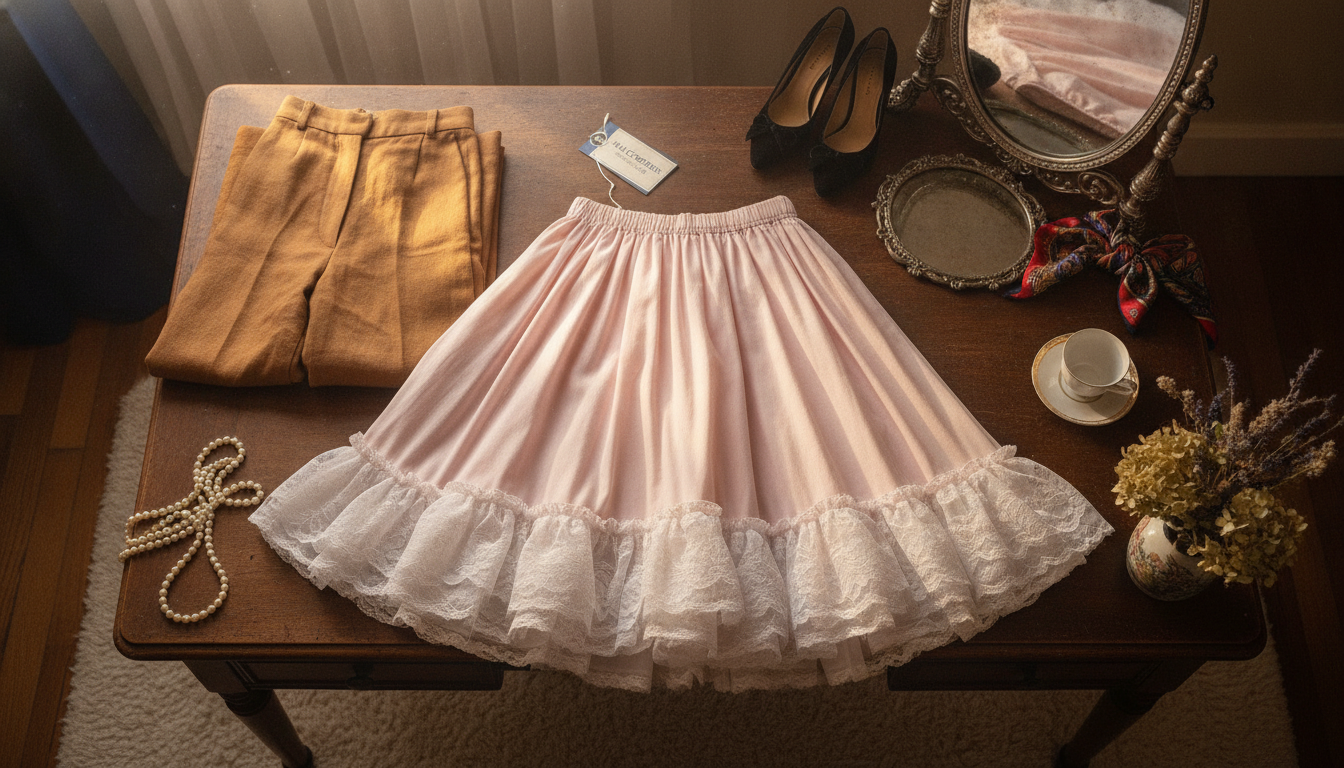
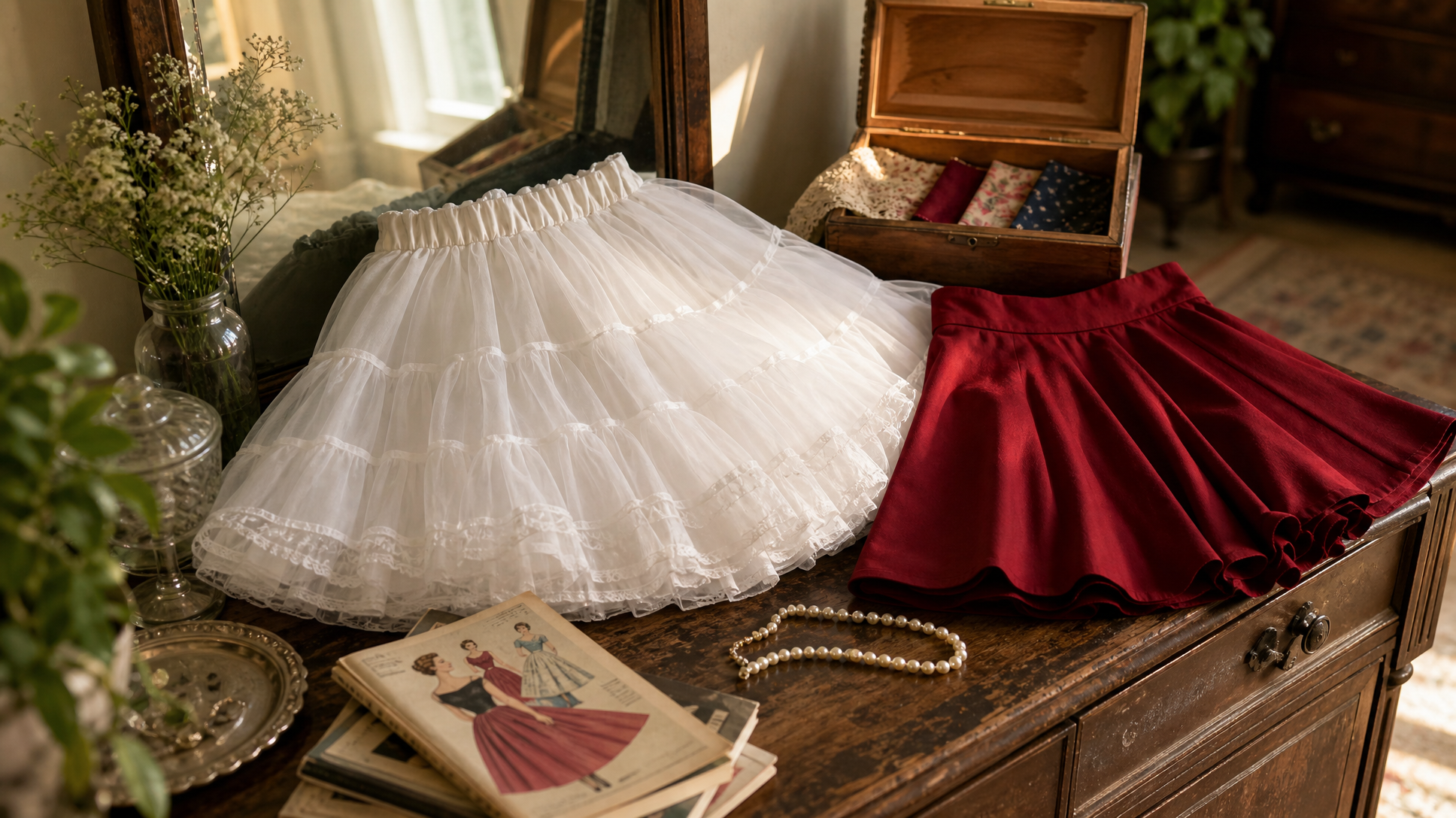
Choose your petticoat color strategically. A white or ivory petticoat under a light-colored skirt adds brightness. A black petticoat under a dark skirt keeps the look sleek. If you want a peek of contrast at the hem, that's a deliberate style choice — own it.
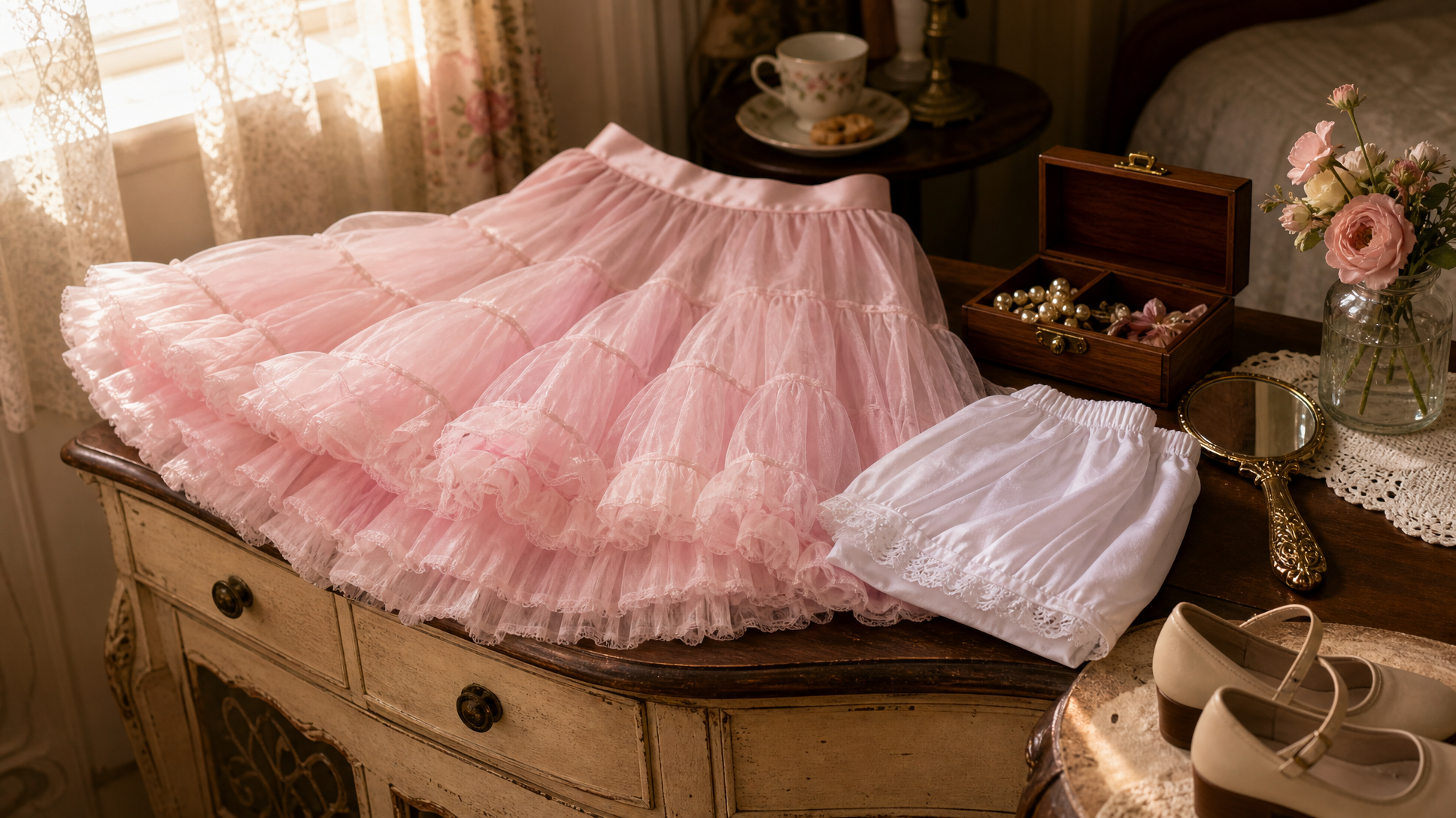
Consider pettipants if you'll be dancing. Pettipants — essentially ruffled shorts worn under a full skirt — keep everything in place when you're actually moving. If the reception has a dance floor, they're worth it for the peace of mind alone.
Finish with a shoe that complements the hem line. Mary Janes, T-straps, and block heels all work beautifully under a full skirt. They're visible enough to be part of the outfit, sturdy enough to dance in.
Forget trends for a second. When you picture yourself at this specific wedding — the venue, the vibe, the photos — which version of you feels most like you? Wide-leg pants are a great choice if you genuinely love the look and feel comfortable in tailored trousers. But if you're considering them mainly because they seem "safer" or more modern, and your instinct is actually toward a full, swishy skirt, trust that instinct. A petticoat-supported skirt at a wedding isn't a costume — it's a silhouette with a century of formal occasion history behind it.
The best wedding guest outfit is the one you're not fidgeting with all day. Choose accordingly.
Ready to build the volume-first look? Shop petticoats, pettipants, and tutus at Malcomodes to find the right layer of fullness for your wedding guest outfit — at prices that leave room in the budget for a gift off the registry.
Frequently Asked Questions
Is it appropriate to wear a petticoat to a wedding as a guest?
Absolutely, as long as the silhouette fits the dress code. A full skirt with a petticoat underneath is a classic formal silhouette — it's been worn at weddings and formal events for decades. For garden parties, vintage-themed weddings, and swing dance receptions especially, it's not just appropriate; it's spot-on.
For very traditional black-tie events, opt for moderate petticoat volume rather than maximum fullness, and pair it with polished accessories to keep the look formal rather than costume-like.
What's the difference between a petticoat and a tutu for wearing under a skirt?
A petticoat is typically a layered undergarment designed to add volume and shape to a skirt or dress — it sits underneath and creates a smooth, full silhouette. A tutu is shorter, more structured, and often has visible layers that peek out below the hem. For a wedding guest look, a petticoat gives you the most versatile, wearable result; a tutu works better for themed events or when you want the layers to be part of the visible outfit.
What are pettipants and do I need them under a full skirt?
Pettipants are ruffled or lace-trimmed shorts worn under a full skirt in place of — or in addition to — a petticoat. They keep everything in place when you're moving, sitting, or dancing, which makes them especially practical at receptions with a dance floor. If you're planning to actually dance, pettipants are worth adding for the comfort and confidence they give you.
Can petite women wear full skirts with petticoats to a wedding without being overwhelmed by volume?
Yes — the key is choosing the right hem length and petticoat fullness. A knee-length or tea-length skirt with moderate volume tends to work best for petite frames, keeping the silhouette proportional. Pairing it with a heel also helps by adding height and letting the skirt hit at a flattering point on the leg. Maximum-volume petticoats are better suited to taller frames or very dramatic settings.